
Special greetings everyone!
In Part I, we reflected on some of the milestones made in the fourth quarter. Building on those earlier reflections, this second instalment reports more on our continental and intercontinental footprint, highlighting our engagements and collaborations across the globe.
In our recent contribution in discussions and actions aimed at advancing science in Africa, our PI, Fidele Tugizimana, participated in the 80th Session of the UN General Assembly (UNGA80). As part of his contribution to the meeting, our PI offered his insights on Pan-Africanism for Sustainability in Scientific Leadership, Innovation, Collaboration and Partnership within the African continent. As such, in our efforts to enhance Pan-African scientific networks for better collaboration and resource sharing, TTL had the pleasure of hosting Mrs.Laura Nwogu-Chigozie for a short research visit.
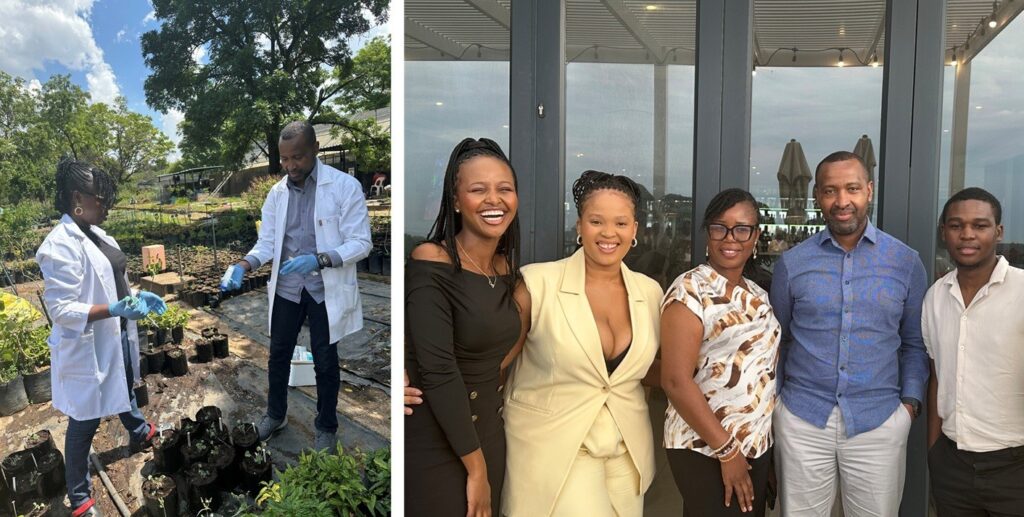
Mrs Nwogu-Chigozie is a PhD candidate in Microbiology, under the supervision of Prof Chioma Blaise Chikere from the University of Port Harcourt, Nigeria. During her research visit, we discussed and worked on an environmental metabolomics project, an exciting ongoing collaboration. While visiting our lab, Mrs Nwogu-Chigozie was trained on various aspects of the metabolomics workflow, including sample preparation and data analysis.
TTL also participated in the 21st Annual RUFORUM AGM 2025, held in Gaborone (Botswana) from 1 to 5 December, following a productive virtual Scientific Forum convened from 17 to 21 November. The 21st RUFORUM AGM is a premier continental gathering focused on strengthening Africa’s higher education and agricultural innovation systems. Co-hosted by the Government of Botswana and RUFORUM member universities, this year’s AGM aligned with key continental strategies including the CAADP Kampala Declaration (2026–2035) and Africa Union Agenda 2063. This gathering brought together passionate leaders, researchers, students, policymakers, and partners from across Africa and beyond – each committed to strengthening higher education, advancing agricultural innovation, and driving sustainable development on the continent. During the Scientific Forum, our PI (Fidele Tugizimana), Dr Keabetswe Ncube, and Ms Kgalaletso Othibeng presented the lab’s advancing work under the thematic areas of Integrating Indigenous Knowledge with Emerging AI-driven Technologies (November 19) and Access, Inclusion, and Competitiveness to Promote Equity among Underserved Populations (November 20).
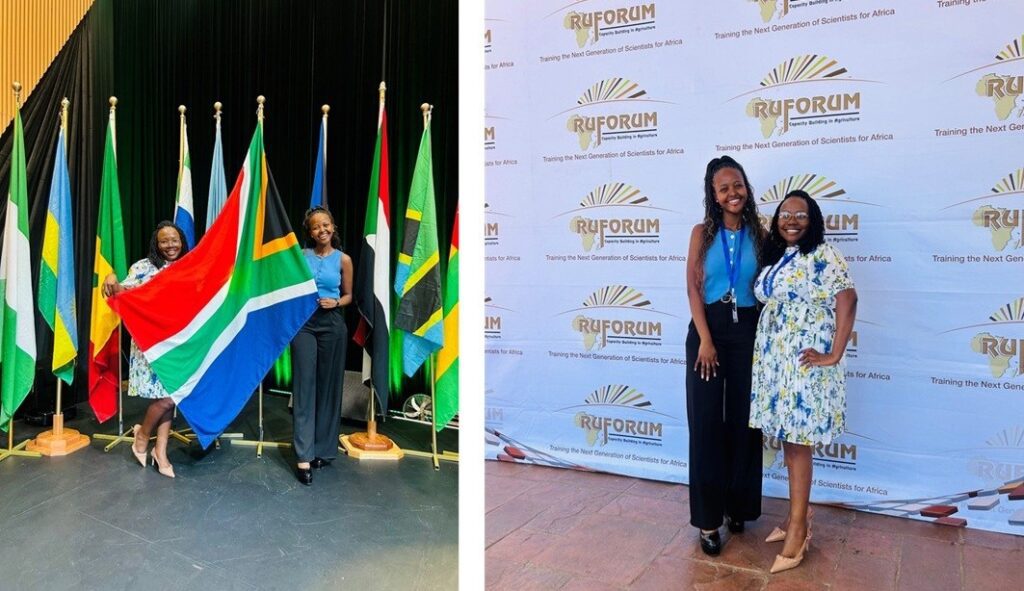
Their contributions highlighted TTL’s leadership in integrating AI-driven metabolomics with inclusive research practices that strengthen agrifood innovation. At the in-person AGM, Dr Ncube and Ms Othibeng engaged with peers, policymakers, and development partners to translate cutting-edge research into scalable, climate-smart solutions for resilient agrifood systems and sustainable development. They also presented a poster showcasing TTL as a continental hub for AI-integrated metabolomics, scientific capacity building, and transformative agricultural research.
In the same month, Dr. Ncube attended the Regional One Health Conference for Eastern and Southern Africa, both as a participant and speaker, contributing to high-level discussions aligned with the conference theme, “One Health, One Future.” Hosted by the Government of Zambia and co-organised by SADC, the World Bank, the Quadripartite Alliance, the PREZODE initiative, and the COHESA project, the conference convened policymakers, scientists, development partners, innovators, and community representatives to examine how One Health principles can be translated into coordinated action across the continent. In her reflections and address, Dr Ncube underscored the necessity of breaking disciplinary and institutional silos, ensuring that One Health strategies are inclusive and reach rural and small-scale farmers, and positioning women, youth, and children as active drivers of Africa’s health, food, and environmental security. She highlighted the critical role of regional collaboration, community-driven surveillance, and science- and technology-enabled solutions in mitigating disease, strengthening food security, and protecting livelihoods across the continent.
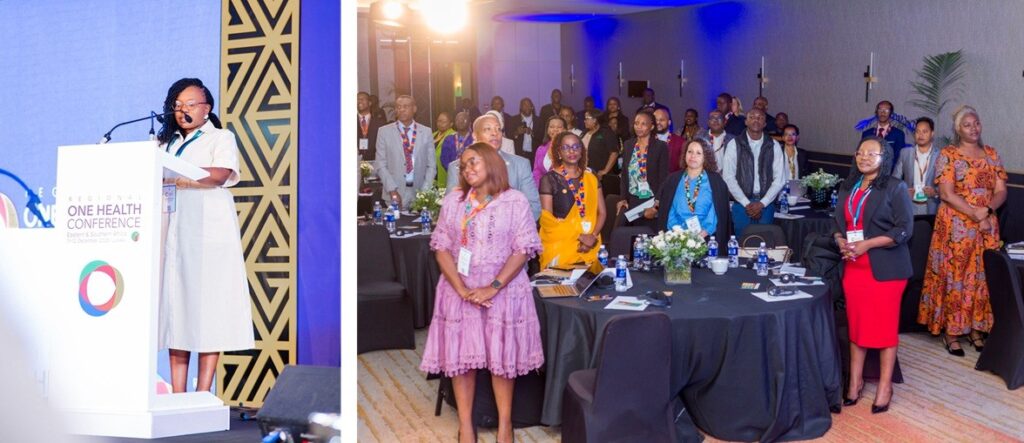
In addition to her speaking role, Dr Ncube participated in the signing of the Joint Call to Action on Driving Regional Action for Africa’s One Health Future, reaffirming a collective commitment to strengthened regional collaboration, policy coherence, and community-centred implementation of One Health approaches. The conference further showcased 21 innovators whose work demonstrated the practical application of One Health, including solutions co-developed with smallholder farmers to improve animal health, food safety, disease surveillance, and livelihood resilience. These innovations highlighted the importance of inclusive, farmer-centred innovation in ensuring that One Health delivers tangible benefits at the grassroots level. Dr Ncube gratefully acknowledges the support of Global Health Strategies and the World Bank, whose sponsorship enabled her participation and meaningful contribution to this important regional platform advancing Africa’s One Health future.
On more intercontinental adventures, Dr. Motseoa Lephatsi (PDRF) embarked on a rewarding research visit to Meijo University in Nagoya, Japan, under the supervision of Professor Yoshiaki Hayashi. The visit formed part of an ongoing international collaboration aimed at strengthening research capacity and fostering the exchange of scientific expertise. During her stay, Dr. Lephatsi was trained in several advanced analytical techniques that enhanced her technical skills and broadened her research perspective.
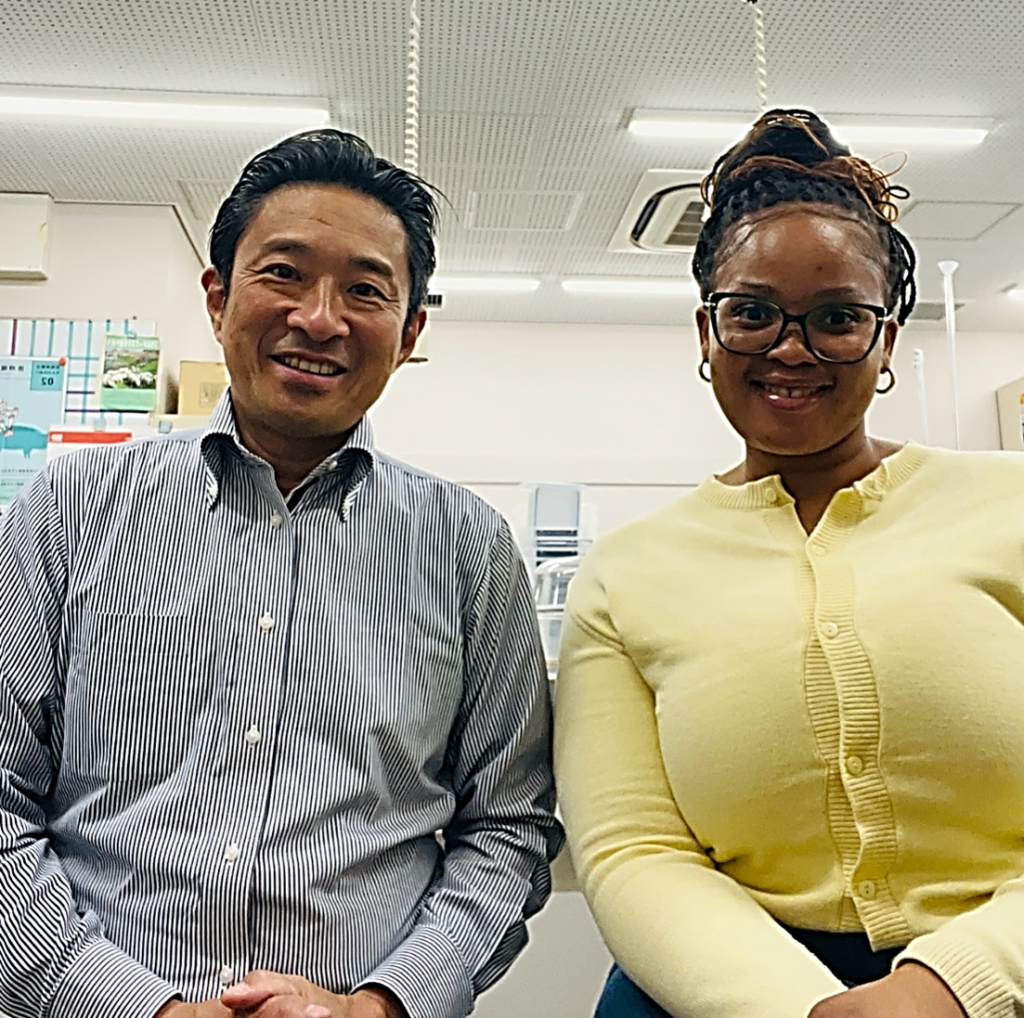
She gained hands-on experience with the Fatex Speedy Fat Extractor System (MRK FATEX-S), applying the Soxhlet extraction method for efficient lipid extraction and sample preparation. In addition, she learned protein content and nitrogen measurement using the Dumatherm system (Gerhardt), an advanced instrument for rapid and precise quantification essential in nutritional studies. Beyond the laboratory, Dr. Lephatsi was inspired by the professionalism, discipline, and collaborative spirit that characterize the research environment at Meijo University. She expressed deep gratitude to Prof Hayishi, who was not only a dedicated mentor but also a generous and welcoming host throughout her stay.
As we close the chapter on an eventful 2025, The Tugizimana Lab (TTL) celebrates not just scientific milestones but the deeper impact of our contributions to local and international scientific gatherings. Whether through mentorship at youth science fairs, thought leadership in global microbiome convenings, or pioneering AI-integrated research showcased across continents, TTL continues to drive innovation with societal purpose. These engagements have strengthened collaborative networks, advanced education, and empowered the next generation of researchers. As our PI, Fidele Tugizimana, reflects with immense gratitude, 2025 has been a year of remarkable growth – fuelled by shared curiosity, resilient partnerships, and a collective vision for research that transforms lives. Here’s to sustaining this momentum into the new year and beyond.
Written By: Dr. Fidele Tugizimana, Dr. Keabetswe Ncube, Dr. Motseoa Lephatsi, Ms. Kgalaletso Othibeng and Ms. Akhona Myoli