Special greetings everyone!
As the fourth quarter of 2025 comes to a close, we reach a natural pause to reflect on the progress and achievements that have defined the final stretch of the year. This moment invites us to acknowledge how far we’ve come and appreciate the collective effort that carried us through. In closing out this quarter, we look back at some of the final strides made by The Tugizimana Lab (TTL).

In the spirit of innovation and discovery, earlier in October, our very own Dr Keabetswe Ncube (PDRF) was fortunate enough to be among the dedicated professionals contributing to the prestigious Eskom Expo International Science Fair. Dr Ncube served as a Category Judge for Biochemistry and Medical Sciences and a Specialist Judge for Computational Science. Drawing on her expertise in genetics, genomics, and bioinformatics, Dr Ncube evaluated projects that explored the intricate world of DNA, molecular mechanisms, and data-driven biotechnology.
Her role involved assessing both the scientific depth and the creativity behind each project, offering valuable feedback to help learners refine their research skills. Reflecting on the experience, Dr Ncube shared how inspiring it was to see young minds engage passionately with complex scientific ideas, some even integrating computational tools and genetic analysis in ways that mirror advanced academic research. Her participation not only upheld the high standards of the fair but also highlighted her commitment to mentorship and the advancement of science education, fostering a new generation of thinkers ready to shape the future of biotechnology and health innovation.
In October, Dr. Ncube also facilitated an online information session for candidates who want to apply for the 75th Lindau Nobel Laureate Meeting (28 June to 3 July 2026). The session, which was organized and hosted by TTL, featured Dr Edith Phalane, a Lindau alumna, who reflected on her transformative experience attending the meeting as a postgraduate scholar, offering practical guidance for future applicants. Dr Anne Chisa, a respected science communicator, enriched the discussion by highlighting the importance of storytelling and media engagement in bridging the gap between scientific discovery and public understanding.
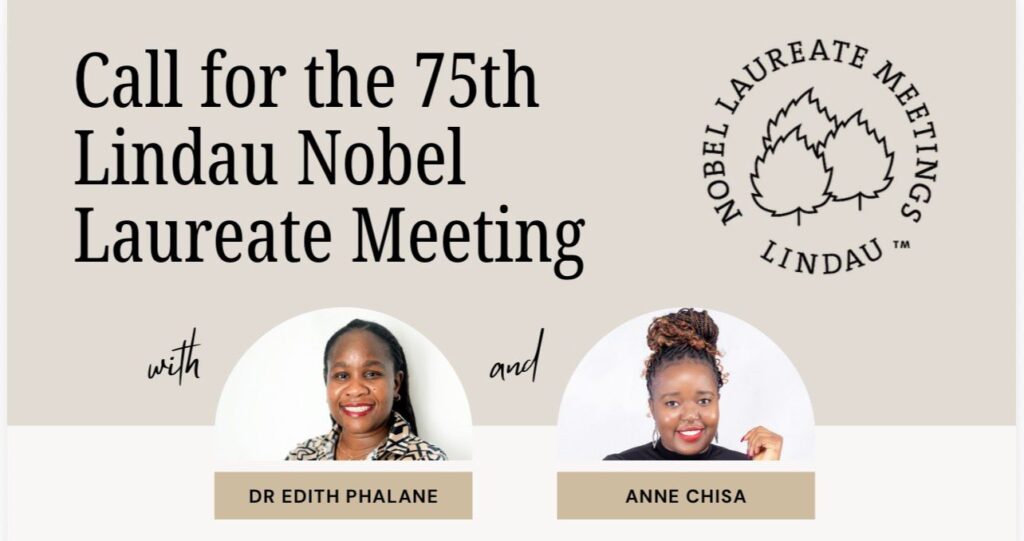
The event also included valuable contributions from the Academy of Science of South Africa (ASSAf) and the Department of Science, Technology and Innovation (DSTI) colleagues, who outlined the national framework supporting South African participation in global scientific dialogues. Together, the speakers provided practical guidance and pointers for potential applicants. They also painted a vivid picture of how international scientific collaboration, communication, and mentorship converge to empower emerging researchers and strengthen South Africa’s presence on the global research stage.
In international adventures, on the 15th of October, Ms. Akhona Myoli left South Africa to join the Center of Plant Systems Biology and Biotechnology (CPSBB) in Plovdiv, Bulgaria, as secondee. CPSBB is a leading research institution dedicated to both fundamental and applied studies in molecular biology, biochemistry, and genetics. The center employs advanced genetics and genomics technologies to explore key questions in plant development. Her secondment forms part of the international research initiative CropPrime – “Stabilizing CROP yield under unfavourable conditions by molecular PRIM(E)ing”.
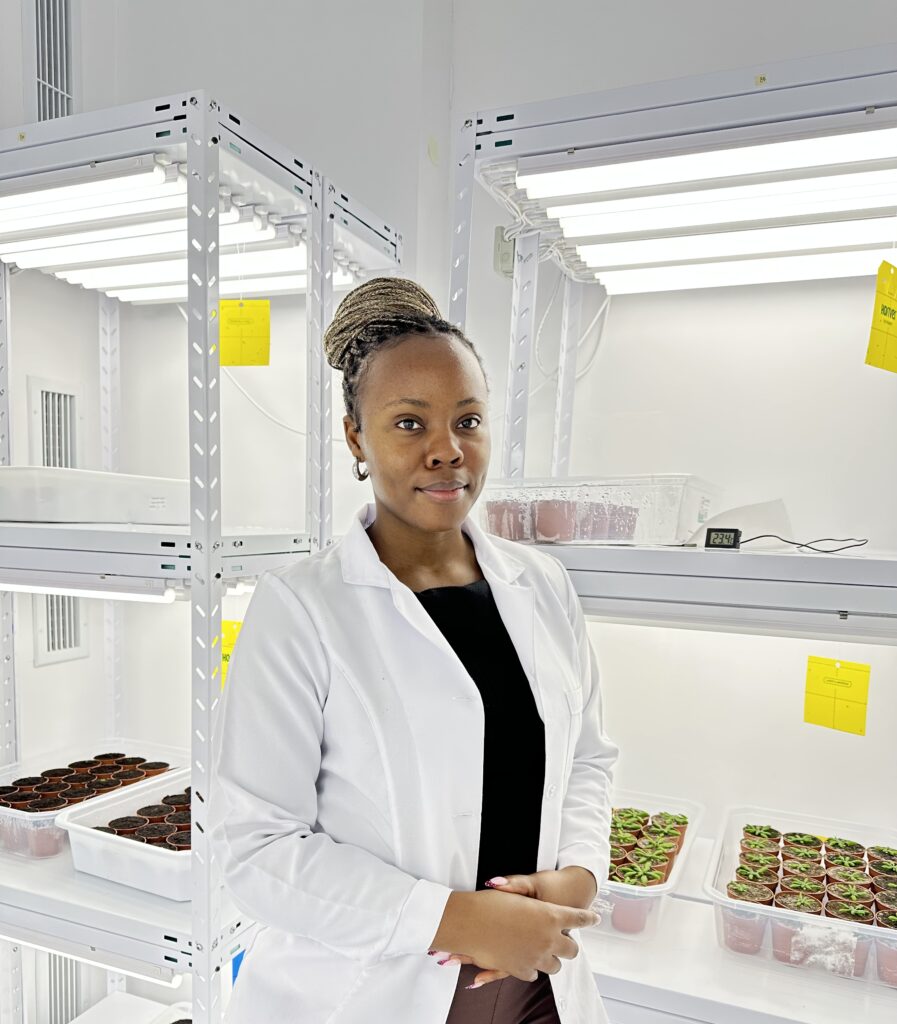
The project is funded by the European Union through the Marie Skłodowska-Curie Staff Exchanges Actions (MSCA-SE) program and involves collaboration between both the University of Johannesburg (UJ) and CPSBB. In the CropPrime project, Ms. Myoli is investigating the mode of action of biostimulants on Arabidopsis thaliana under abiotic stress conditions. During her stay at CPSBB, she aims to gain advanced skills in plant signal transduction, stress tolerance characterization and bioinformatics, with the goal of integrating these skills into her ongoing research.
In the same breath, our PI was also invited to participate in the Microbiome Key Opinion Leaders (KoL) Convening, held in Copenhagen, Denmark, on 22–23 October 2025. The event, co-hosted by the Gates Foundation and the Novo Nordisk Foundation, brought together 20 globally recognised experts to discuss cutting-edge strategies for unlocking the therapeutic potential of microbiome-derived metabolites. The meeting’s agenda included integrating mass spectrometry-based metabolomics, artificial intelligence for functional predictions, and functional screening platforms, particularly for applications related to gut health, metabolism, and maternal nutrition.
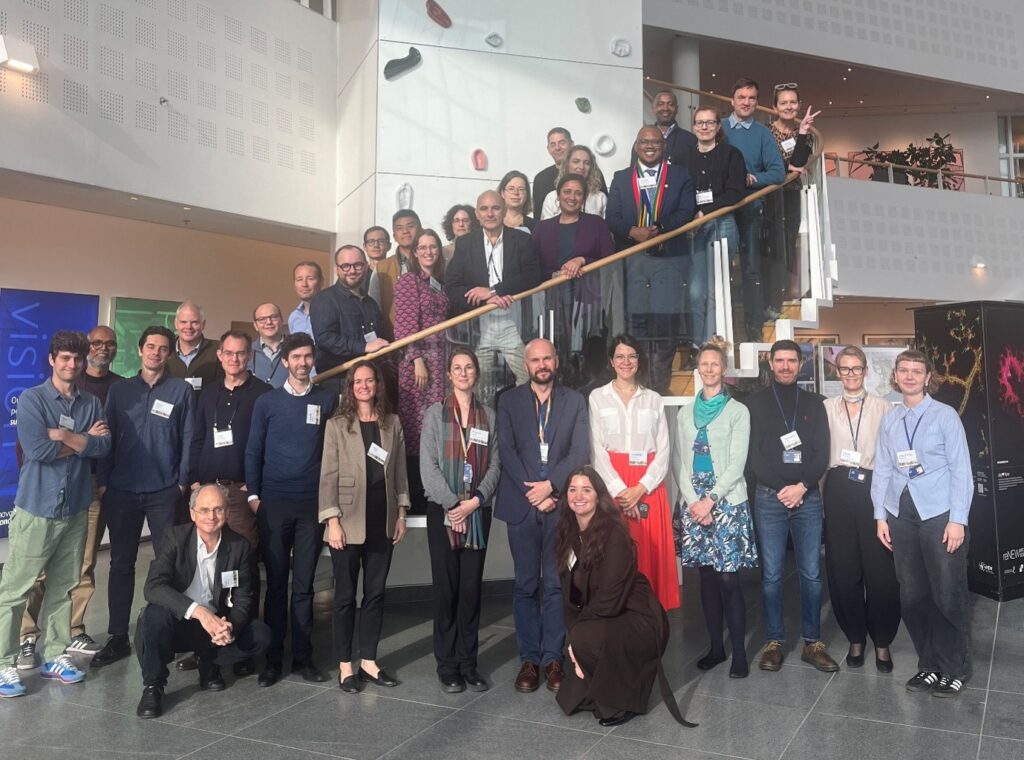
Fidele Tugizimana actively contributed to various sessions including defining metabolomics workflows and AI-assisted annotation strategies. He also engaged with existing collaborators, including Prof. Pieter Dorrestein (UCSD, USA) and Prof. Justin van der Hooft (Wageningen University, Netherlands), who is also a Visiting Professor at UJ. Furthermore, the convening enabled him to initiate promising new collaborations with researchers from Stanford University and Stellenbosch University. The meeting concluded with the joint drafting of an actionable concept note, with follow-up initiatives now underway.
We are truly proud of all the TTL members and as we conclude, we recognize that the progress made by the group this quarter is the result of collective effort, shared learning, and sustained commitment to research excellence and sustainable societal impact. As such, with hard work and dedication in this last quarter of the year, TTL has produced the following publications:
While this overview captures some of the key highlights, it represents only part of the story. We encourage everyone to stay tuned for part II for more milestones!
Written By: Dr. Fidele Tugizimana, Dr. Keabetswe Ncube and Akhona Myoli