
As 2026 unfolds, TTL has wasted no time setting the pace—stepping into the year with energy, purpose, and a growing sense of possibility. From international research engagements to graduation milestones, the first quarter has already been defined by momentum and meaningful progress. This period also marks an exciting phase of growth within the TTL family. We were proud to see Dr. Lerato Tshehlane officially step into her role as a Research Associate, strengthening our research capacity. At the same time, we warmly welcomed a new cohort of emerging scientists: Ms Amanda Mthethwa and Ms Thabisile Hadebe joining for their MSc journeys, Ms Rachel Ncube embarking on her PhD, and Mr Samuel Mulaudzi and Ms Innocentia Selepe continuing their academic paths into doctoral studies. Adding to this vibrant community, Mr Darshan Govender and Mr Thato Mahlaha joined us for their BSc Honours research—bringing fresh curiosity and energy. Together, these milestones reflect not just growth, but a shared commitment to shaping the future of science, with societal impact.
We began the year on a global stage where Ms Kgalaletso Othibeng embarked on a three-month research visit to the University of Antwerp in Belgium, supported by the VLIR-UOS Global Minds Fellowship. Working closely with the Bittremieux Lab, she deepened the computational dimension of her PhD through hands-on engagement with advanced spectral analysis tools and machine learning techniques for metabolite annotation. Applying these methods to South African plant datasets not only sharpened her technical expertise but also expanded her approach to interpreting complex LC-MS/MS data.


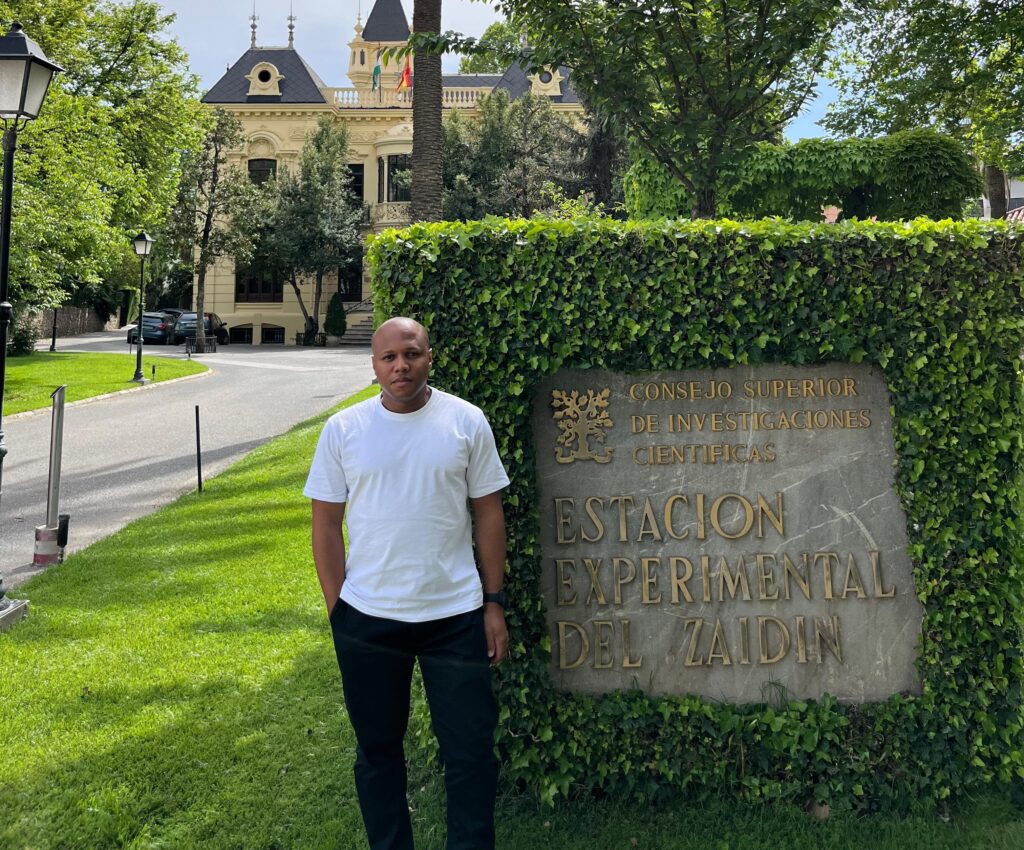
Meanwhile, Dr. Morena Tinte has been contributing to the CropPrime project from Granada, Spain, at the Estación Experimental del Zaidín (EEZ-CSIC) as a secondee. His work at EEZ-CSIC, funded by the European Union through the Marie Skłodowska-Curie Staff Exchanges Actions (MSCA-SE) program, sits at the intersection of proteomics and metabolomics, focusing on how biostimulant formulations influence plant systems at the molecular level.

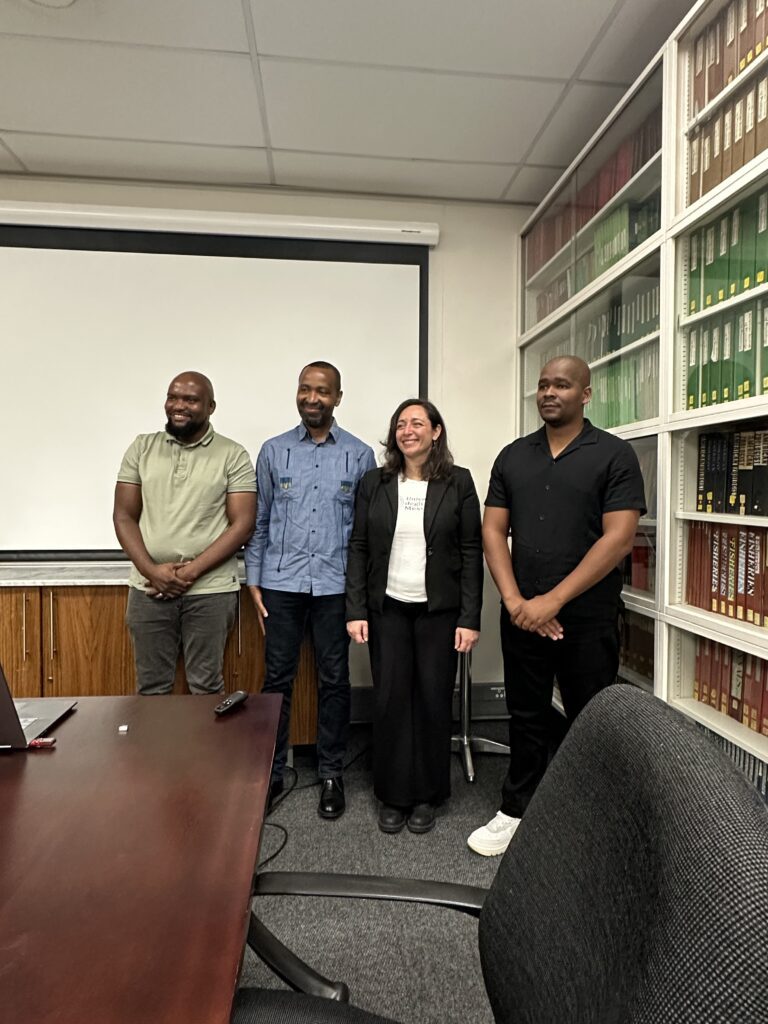
Back home, on the 9th of March, we had the privilege of hosting Prof. Cappello from the University of Messina (UniME), Italy. Prof. Cappello is a professor and an expert in NMR-based metabolomics, with a research focus on ecotoxicology and the biomonitoring of aquatic environments. Prof Cappello is also the host of our PI (Fidele Tugizimana) at the UniME where he serves as a Visiting Professor (VP). During her visit, Prof Cappello engaged with staff and students. She delivered a seminar highlighting her research on the effects of environmental stressors, such as metals, pharmaceuticals, and microplastics, on aquatic organisms. The visit also created an opportunity to discuss current and future collaborative initiatives.

Building on this engagement, the momentum carried seamlessly into the 1st African Metabolomics Conference (11–13 March 2026), where Prof. Cappello joined as an invited speaker alongside a diverse and vibrant community. Set against the scenic backdrop of Misty Hills, the conference, under the theme, “Metabolomics in Motion: Advancing Science for Africa’s Future”, brought together leading academics, industry partners, innovators, and international delegates—reflecting the expanding relevance of metabolomics across sectors. More than just a gathering, this inaugural conference marked a pivotal moment for the continent: the formal emergence of a coordinated African metabolomics community, united in its mission to advance research, innovation, and capacity development. Hosted by Metabolomics South Africa (MSA) under the leadership of its co-founder and current President, our PI (Fidele Tugizimana), the event laid a strong foundation for continental collaboration, global partnerships, and the translation of metabolomics into solutions addressing Africa’s priorities in health, agriculture, and environmental sustainability.

Among the many contributors to this collective milestone were members of the Tugizimana Lab (TTL), who played an active role both behind the scenes and throughout the conference. In the lead-up, Ms Kgalaletso Othibeng, Dr Keabetswe Ncube, and Dr Motseoa Lephatsi served on the Scientific Organising Committee, contributing to the development of a rich and forward-looking programme. During the conference, this involvement translated into meaningful engagement: our PI and Ms Akhona Myoli facilitated interactive workshops, while Dr Ncube supported early-career researchers through a session on grant application strategies. TTL’s research presence was equally visible, with oral presentations by Ms Akhona Myoli, Mr Samuel Mulaudzi, and Ms Victoria Ntokozo Macu, complemented by poster contributions from Ms Asanda Mavodze, Ms Faith Phahlane, Ms Lungelwa Zweni, Mrs Maria Lau, Ms Thuso Mudau, Ms Rudzani Matodzi, and Ms Blessing Dzveta. Beyond the conference, TTL members continue to contribute actively within MSA committees, supporting training, early-career development, and the sustained growth of the African metabolomics community.

As we look ahead, the story of TTL continues to unfold at the intersection of science, innovation, and purpose. From harnessing artificial intelligence to decode complex biological systems, to advancing research that speaks directly to Africa’s challenges in health, agriculture, and sustainability, each step forward carries a deeper meaning. These are not just scientific pursuits—they are contributions to a broader societal impact and an evolving African research agenda. In alignment with the University of Johannesburg’s Strategic Plan 2035, particularly its emphasis on societal impact, sustainability, and technology for the future, TTL’s work reflects a commitment to research that is both globally relevant and locally impactful. With momentum building and new collaborations taking shape, this is only the beginning. Stay connected as we continue to push boundaries, tell our story, and shape a future where science drives meaningful change.
Written by: Asanda Mavodze, Sinekamva Mnyamana, Lufuno Mabogo and Anela Keke.
Edited by : Dr. Fidele Tugizimana, Thuso Mudau, Faith Phahlane and Akhona Myoli